7 Cannabis Real Estate Red Flags Applicants Should Catch Early
7 Cannabis Real Estate Red Flags Applicants Should Catch Early
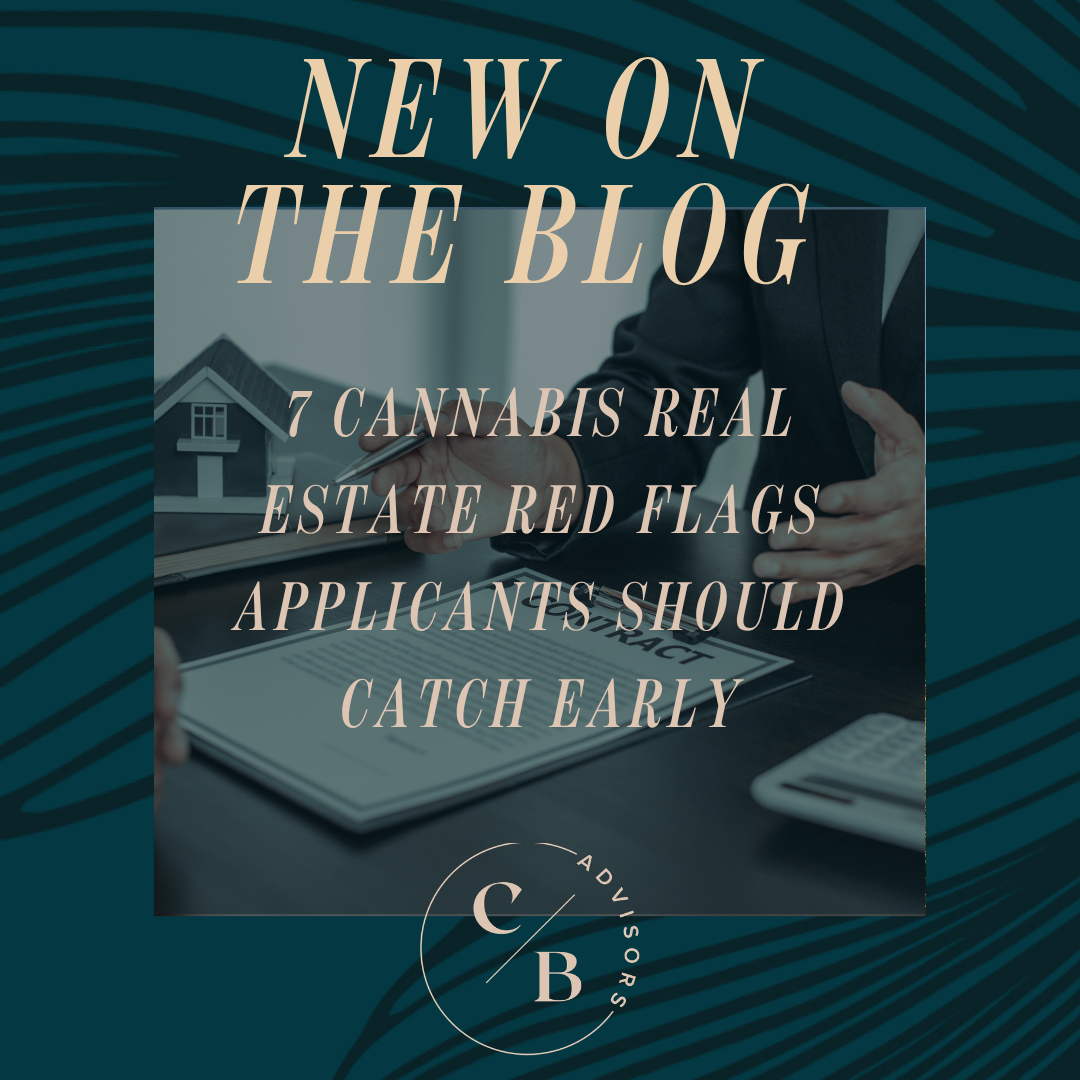
The most expensive cannabis real estate mistakes are usually made before the application is ever filed. A property can look perfect on paper — the right square footage, a willing landlord, good visibility — but none of that matters if the property cannot legally or practically support a cannabis business. State rules, local zoning, sensitive-use buffers, conditional use requirements, building limitations, and application-specific property requirements can all disqualify a site that appears available. The earlier applicants identify these issues, the more options they have; the later they find them, the more expensive the problem becomes.
Below are seven red flags cannabis license applicants should catch before negotiating a lease, paying deposits, completing site plans, or investing in application materials.
Why Cannabis Real Estate Is Not Like Traditional Commercial Real Estate
A location may be zoned for retail, manufacturing, agriculture, or industrial use and still not qualify for a cannabis license. Cannabis real estate operates under a separate layer of rules that traditional commercial deals never touch — and one of the biggest mistakes applicants make is assuming that a landlord’s willingness to lease the property means the location is eligible for cannabis use.
It does not.
A property listing may describe a building as commercial, industrial, warehouse, or retail space. The landlord may even say cannabis use is allowed. But applicants still need to ask:
- Is cannabis specifically permitted in this zoning district?
- Does the proposed license type match the permitted use?
- Is the use allowed by right, or does it require a conditional use permit?
- Are there local cannabis overlay districts?
- Does the property fall within a prohibited buffer?
- Is the municipality accepting cannabis businesses at all?
- Will the state accept the type of zoning verification available for the site?
These questions should be answered before an applicant becomes financially committed to a property.
Red Flag #1: The Zoning “Looks Right,” but Cannabis Use Has Not Been Confirmed
A property may sit in a commercial or industrial zoning district that appears compatible with the proposed business. That is not the same as confirming cannabis use.
Cannabis businesses are often regulated separately from traditional retail, manufacturing, agricultural, or warehouse uses. A city may permit general manufacturing in a district but require cannabis manufacturing to obtain additional approval. A dispensary may be treated differently from a standard retail store.
The safest approach is to confirm the exact proposed license type. Applicants should not simply ask whether “cannabis” is allowed — they should determine whether the specific use, such as a dispensary, cultivation facility, manufacturing operation, testing laboratory, or delivery business, is permitted at the exact property.
Red Flag #2: Nobody Has Verified the Sensitive-Use Buffers
Setback requirements can eliminate an otherwise strong property. Depending on the jurisdiction, cannabis businesses may be required to remain a certain distance from locations such as:
- Schools
- Daycares
- Parks
- Places of worship
- Youth centers
- Other cannabis businesses
- Residential areas
The measurement method can be just as important as the distance itself. A buffer may be measured from property line to property line, building entrance to building entrance, parcel boundary to parcel boundary, or by another method defined in state or local rules.
Applicants should also avoid relying only on a quick online map. A location that appears outside a buffer may still fail once the correct parcels, property boundaries, or measurement rules are applied.
Red Flag #3: The Property Requires an Approval That May Take Months
Some properties are not automatically eligible for cannabis use. They may require:
- A conditional use permit
- Special use approval
- A zoning variance
- Site plan approval
- A public hearing
- A cannabis-specific local permit
Applicants need to understand these requirements early because the approval timeline may not match the application timeline. A property can technically be eligible for cannabis use while still being a poor application property if the required local approval cannot be completed before the state deadline.
This is especially important in competitive application programs where applicants may need to demonstrate property control, zoning approval, or local authorization at the time of application.
Red Flag #4: The Lease Does Not Protect the Applicant
Cannabis applicants often need to secure property before they know whether they will receive a license. That creates risk: a poorly structured lease can leave an applicant paying rent for months — or even years — on a property they cannot use.
Applicants should think carefully about:
- What happens if the license is not awarded?
- What happens if zoning approval is denied?
- When does full rent begin?
- Can the lease be terminated if the property becomes ineligible?
- Does the landlord clearly authorize the proposed cannabis use?
- Can the applicant complete construction and licensing improvements?
- Are there restrictions in the lease that conflict with cannabis operations?
The goal is not simply to control the property. The goal is to control the property without creating unnecessary risk before the applicant knows whether the business can legally open.
Red Flag #5: The Property Works for the Application but Not the Actual Operation
Some properties look strong during the application process but create major operational problems later. A cultivation facility may not have enough power. A manufacturing property may not have sufficient ventilation or utility capacity. A dispensary may have poor parking or limited customer access. A building may require significant fire code, security, ADA, or occupancy improvements before it can open.
Applicants should ask more than whether the property qualifies — they should ask whether it can realistically support the planned business. Important issues can include:
- Electrical capacity
- Water availability
- Wastewater systems
- HVAC and ventilation
- Odor control
- Parking
- Loading and delivery access
- Security infrastructure
- Fire and building code compliance
- Expansion potential
A cheap property can become very expensive once the cost of bringing it into compliance is understood.
Red Flag #6: The Applicant Has Property Control, but Not the Right Proof
Cannabis applications often require applicants to prove they have the right to use a property — and the exact requirement varies by program. Some states may accept a lease. Others may require a purchase agreement, deed, option agreement, landlord authorization, or another form of site control. The applicant may also need separate proof that the property is properly zoned.
A lease alone may not satisfy a zoning requirement. A zoning map alone may not satisfy a state application requirement.
Applicants should identify exactly what documentation the licensing authority requires before relying on the property. This is especially important when applications require a zoning verification letter, zoning certificate, local approval form, or other formal confirmation.
Red Flag #7: The Local Rules Are Still Changing
Cannabis zoning can change quickly. A city may be considering a moratorium. A county may be drafting a new ordinance. A municipality may be debating license caps, overlay districts, buffers, or local approval procedures.
Applicants should not assume that today’s rules will remain unchanged throughout the application and development process. Local agendas, planning commission meetings, city council discussions, and proposed ordinance amendments can provide early warning that a property may face future complications.
Real estate diligence should include more than reviewing the current zoning code. It should also include watching what the local government is preparing to do next.
Why Are the Most Expensive Real Estate Problems Found Too Late?
Many cannabis applicants become emotionally and financially attached to a property before completing full diligence. They negotiate the lease, pay a deposit, hire architects, create floor plans, and begin application narratives around the location. Then someone discovers the problem:
- The property is inside a buffer.
- The zoning district does not allow the proposed license type.
- The required conditional use permit cannot be approved before the application deadline.
- The lease does not include a licensing contingency.
- The building needs infrastructure upgrades the applicant did not budget for.
At that point, changing properties can affect the entire application. The best time to identify a real estate problem is before the applicant has built the rest of the project around the site.
How Should Applicants Evaluate a Cannabis Property?
Cannabis real estate should be treated as part of the application strategy — and part of overall license application readiness — not as a separate transaction. The strongest property is not always the biggest building, the lowest rent, or the most visible location. It is the property that can survive the full licensing and development process.
Before committing, applicants should be able to answer:
- Is the proposed cannabis use permitted?
- Have all required buffers been verified?
- What local approvals are required?
- Can those approvals be completed on time?
- Does the property control document meet the application requirements?
- Does the lease protect the applicant if the license or zoning approval is denied?
- Can the building physically support the operation?
- Are there local rule changes that could affect the site?
The earlier these questions are answered, the easier it is to avoid costly surprises.
How The Cannabis Business Advisors Can Help
The Cannabis Business Advisors helps applicants pursuing a cannabis license evaluate properties, understand state and local zoning requirements, identify sensitive-use setbacks, determine required zoning verification, and catch potential red flags before they become application problems. Contact The Cannabis Business Advisors today for help on your cannabis license application, including ensuring your real estate strategy supports both the application and the business that comes after it.
Frequently Asked Questions
Does a landlord’s approval mean a property is eligible for a cannabis license?
No. A landlord’s willingness to lease the property — even a listing that says cannabis use is allowed — does not mean the location is eligible. Applicants still need to confirm zoning, license-type compatibility, buffers, local approvals, and whether the municipality is accepting cannabis businesses at all.
Can a property be zoned commercial or industrial and still not qualify for a cannabis business?
Yes. Cannabis businesses are often regulated separately from traditional retail, manufacturing, agricultural, or warehouse uses. A city may permit general manufacturing in a district but still require cannabis manufacturing to obtain additional approval.
What are sensitive-use buffers in cannabis real estate?
Buffers are setback requirements that may keep cannabis businesses a certain distance from locations such as schools, daycares, parks, places of worship, youth centers, other cannabis businesses, and residential areas. The measurement method — property line to property line, building entrance to building entrance, or parcel boundary to parcel boundary — can matter as much as the distance itself.
What should a cannabis lease include to protect an applicant?
The lease should address what happens if the license is not awarded or zoning approval is denied, when full rent begins, whether the lease can be terminated if the property becomes ineligible, whether the landlord clearly authorizes the proposed cannabis use, and whether the applicant can complete construction and licensing improvements.
What proof of property control do cannabis license applications require?
It varies by program. Some states may accept a lease; others may require a purchase agreement, deed, option agreement, or landlord authorization. Applicants may also need separate zoning proof, such as a zoning verification letter, zoning certificate, or local approval form — a lease alone may not satisfy a zoning requirement.
YOU MIGHT ALSO BE INTERESTED IN